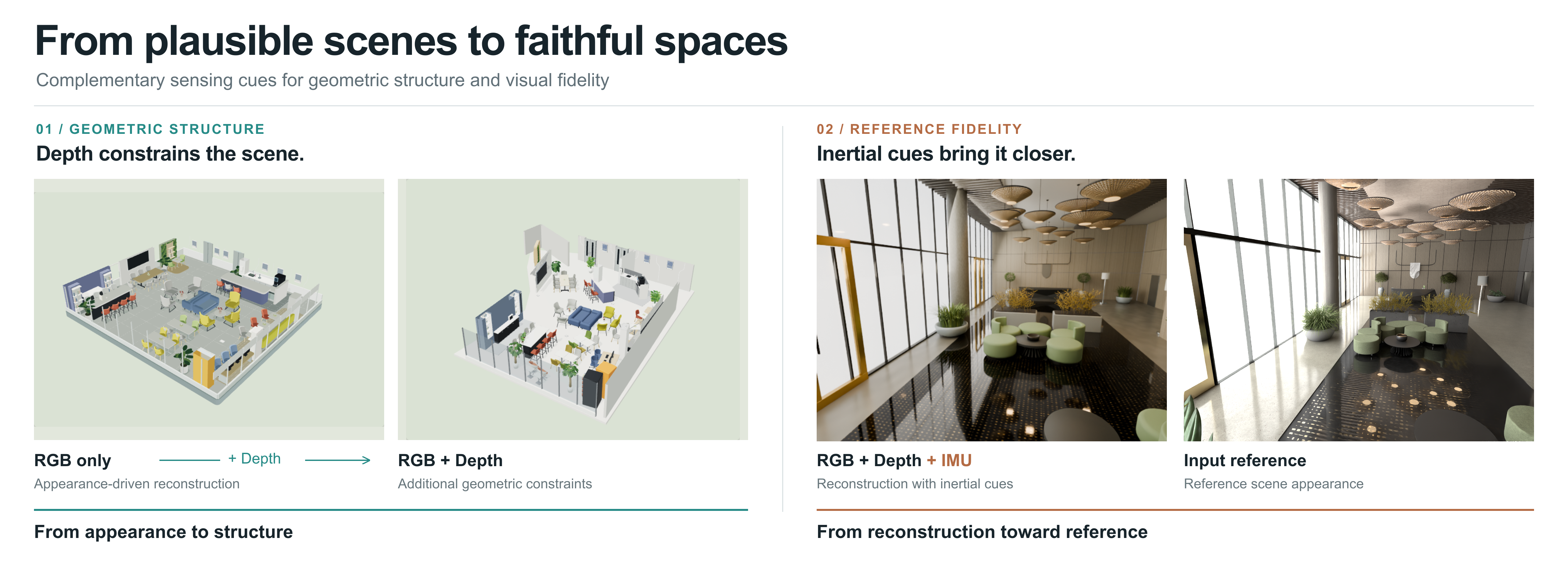
Figure 1. Additional geometric evidence progressively constrains spatial structure; reference appearance remains a separate objective.
01 / RESULTS
A scene can look plausible and still be spatially wrong.
Image synthesis rewards a convincing frame. A spatial system has a harder obligation: scale, location, occlusion, and object boundaries must remain coherent when the camera moves—and the result must still be editable after rendering ends.
We reconstruct the same World Lobby through four complete engineering routes, from RGB-only modeling to ground-truth-pose-conditioned modeling. Each route produces a frozen Blender scene, not merely a point cloud or a novel-view renderer. The experiment asks what additional geometric evidence buys, where it fails to help, and which errors survive object-centric reconstruction.
0.376 → 0.072 mbidirectional surface error
16.44% → 7.60%180-view model-depth AbsRel
No universal winnerPSNR, SSIM, and LPIPS disagree
M1 values use a diagnostic GT-assisted Sim(3); all claims are scoped to this frozen single-scene study.
02 / MOTIVATION
From a good-looking render to a usable spatial representation
An editable world model is useful because its objects can be selected, moved, hidden, assigned materials, queried for collisions, and revisited from known cameras. Those affordances matter for design, robotics, and simulation. They also expose errors that a single attractive image can conceal.
Our working hypothesis is that measurement does not replace generative reasoning; it constrains it. Pose and depth should reduce the space of plausible layouts, while the modeling system converts noisy observations into a compact semantic scene. That conversion can regularize noise, but it is also lossy: omitted surfaces and simplified materials do not reappear simply because the camera trajectory improves.
Contributions
A controlled four-route study that keeps the scene, 180 RGB identities, modeling objective, and editable output format fixed while varying the geometric evidence.
A measurement contract that separates trajectory error, native depth, frozen-scene depth, surface geometry, and rendered appearance instead of collapsing them into one score.
Frozen Blend/GLB assets, deterministic evaluation subsets, public hashes, and interactive comparisons that let readers inspect where aggregate metrics agree—and where they do not.
03 / WORKFLOW
Four routes, one frozen evaluation contract
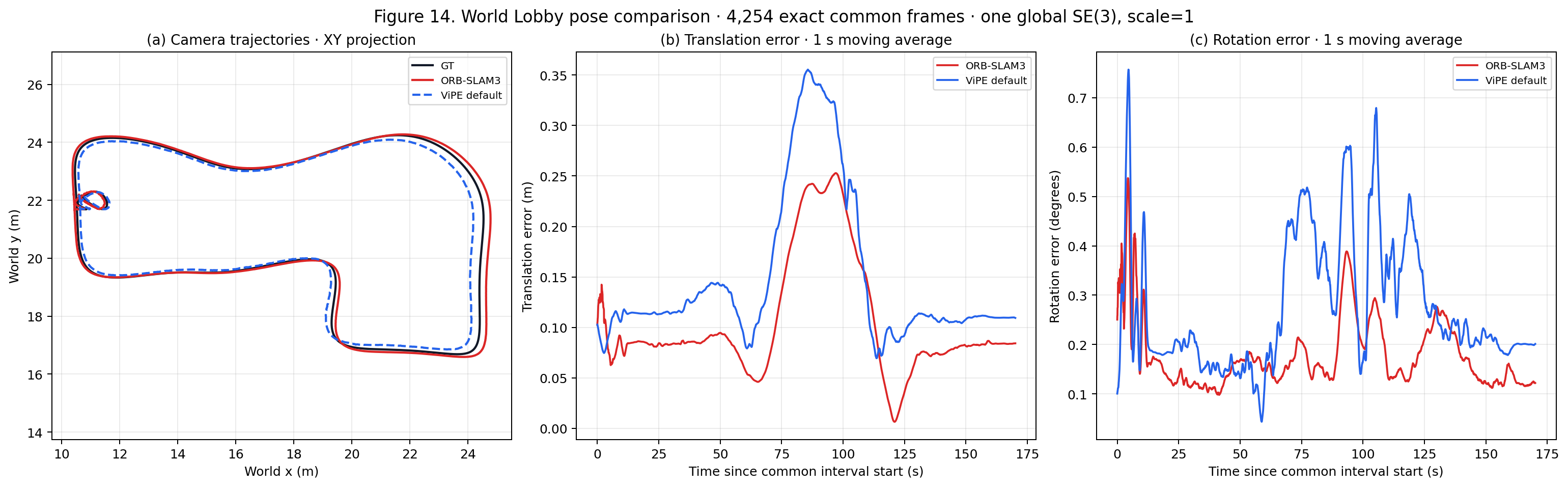
All routes receive the same 180 RGB identities and the same Astra–Blender modeling objective. M1 tests how far visual priors can go without metric measurements. M2 adds RGB-only ViPE poses and pose-conditioned DA3 depth. M3 uses monocular-inertial ORB-SLAM3 poses with the same class of DA3 observations. M4 supplies ground-truth camera poses to diagnose the remaining modeling error; it does not receive the GT mesh or GT depth as modeling input.
Table 1.
Agentic reconstruction loop
01 · ObserveInspect all 180 RGB frames and, where allowed, pose-conditioned DA3 geometry.
02 · BuildWrite Blender Python that decomposes the room into named objects, materials, cameras, and collision proxies.
03 · VerifyCompare paired RGB and optical-Z renders at fixed review cameras; revise within a fixed version budget.
04 · FreezeExport Blend/GLB, manifests, semantic IDs, and hashes before any GT score is visible to the author.
05 · EvaluateMeasure pose, native depth, model depth, surface distance, and appearance under one frozen protocol.
Ground truth is introduced only after the scenes are frozen. M2 and M3 are evaluated under one global SE(3) alignment with scale fixed to one; no mesh ICP or per-view fitting is used. M1 has no native metric trajectory, so its model-space numbers use one frozen GT-assisted Sim(3) from five manual camera associations and remain diagnostic rather than evidence of metric recovery.
04 / MORE RESULTS AND ANALYSIS
Three findings matter more than a leaderboard
FINDING 01
1. Better pose does not mechanically imply better native depth
M3 improves trajectory accuracy over M2—ATE falls from 0.167 m to 0.121 m and rotation error from 0.31° to 0.19°. Yet its native DA3 AbsRel is slightly worse (20.38% versus 19.06%). After modeling, the ordering reverses: M3 reaches 8.37% model-depth AbsRel versus 9.29% for M2. Upstream metrics and downstream scene fidelity are related, but they are not interchangeable.
Table 2.Figure 2. The upstream trajectory and native-depth ranking does not map one-to-one onto frozen-scene depth.
FINDING 02
2. Geometric evidence turns a plausible layout into a more faithful space
Under the declared alignment and without mesh ICP, bidirectional surface error falls from 0.376 m for the RGB-only diagnostic baseline to 0.118 m with ViPE, 0.082 m with ORB-SLAM3, and 0.072 m with GT poses. M4 is strongest on geometry in this case, while M3 closes most of the gap using an estimated trajectory.
Table 3.
FINDING 03
3. Geometric fidelity and image similarity are different objectives
There is no appearance champion. Across the 100-view check, M2 has the highest PSNR (13.21 dB), M3 the highest SSIM (0.397), and M4 the lowest LPIPS (0.524). M4 simultaneously has the best geometry and model-depth AbsRel. A more faithful spatial model can still lose pixels to approximate materials, lighting, and simplified object boundaries.
Table 4.Table 5.
Do not trust the aggregate alone—inspect the frozen worlds
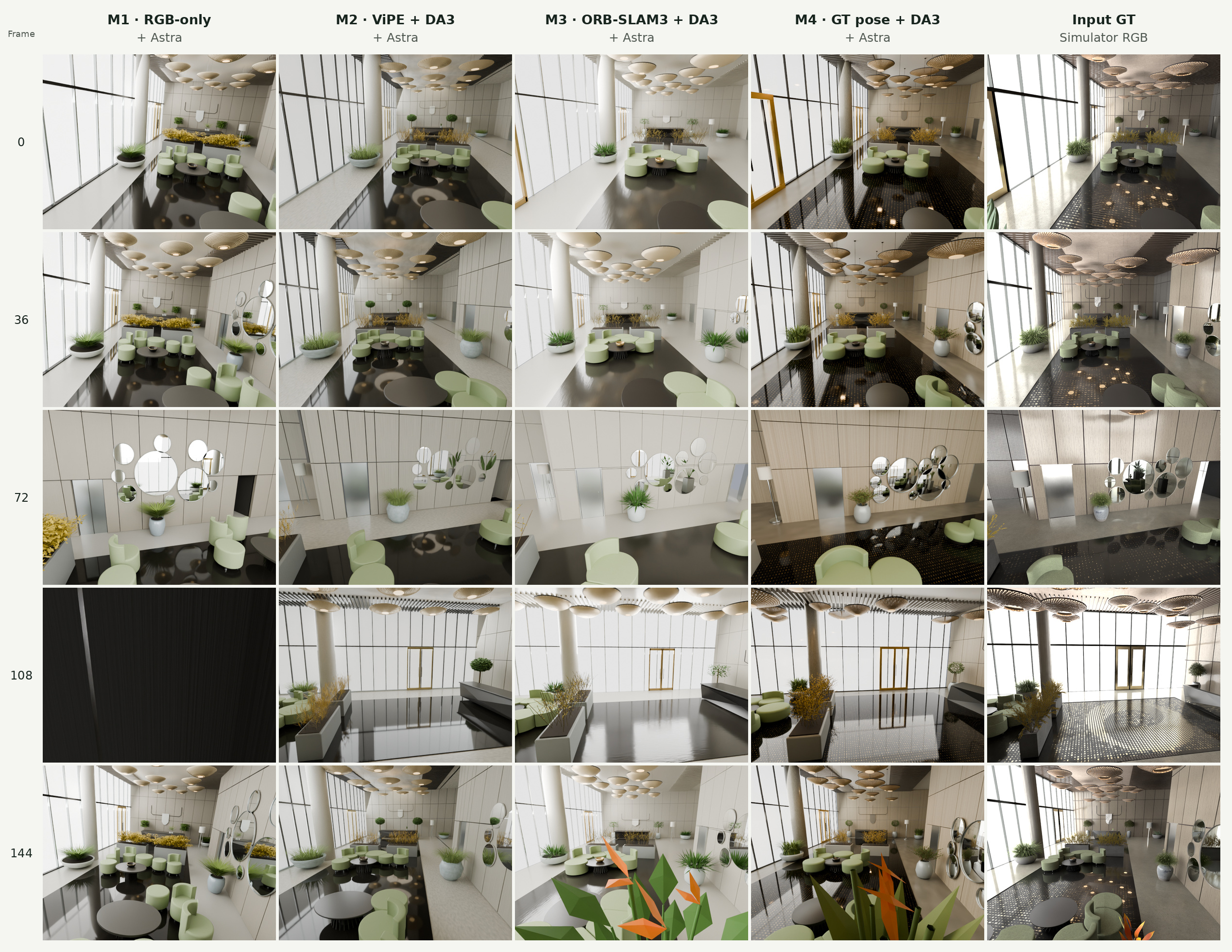
Use the shared camera to compare each reconstruction with GT. Start with M1 to see how a semantically plausible room can drift in metric layout; compare M2 and M3 to find regions where geometry improves without a matching gain in RGB similarity; then inspect M4 to isolate errors that remain even when camera pose is no longer the bottleneck.
Rotate, zoom, and inspect the frozen scenes
M4GT
Scroll here to load the 3D comparison.
Figure 3. One camera and one full viewport compare the selected frozen model with GT. Ceilings and surrounding walls are hidden at runtime for the same cutaway-style inspection; source files remain unchanged.
M1 / VIEW 0
INPUT / GT RGB
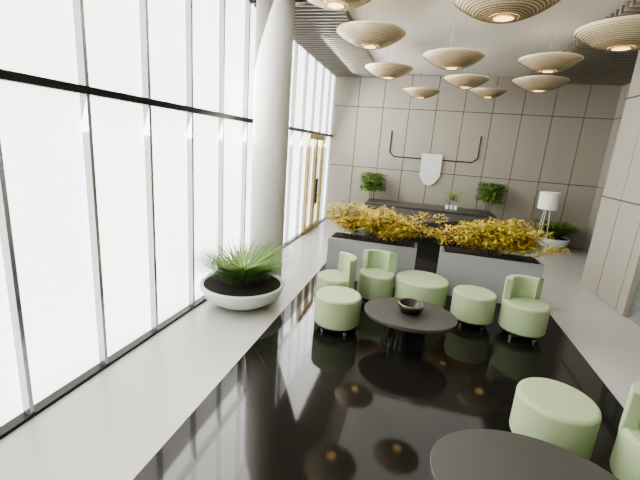
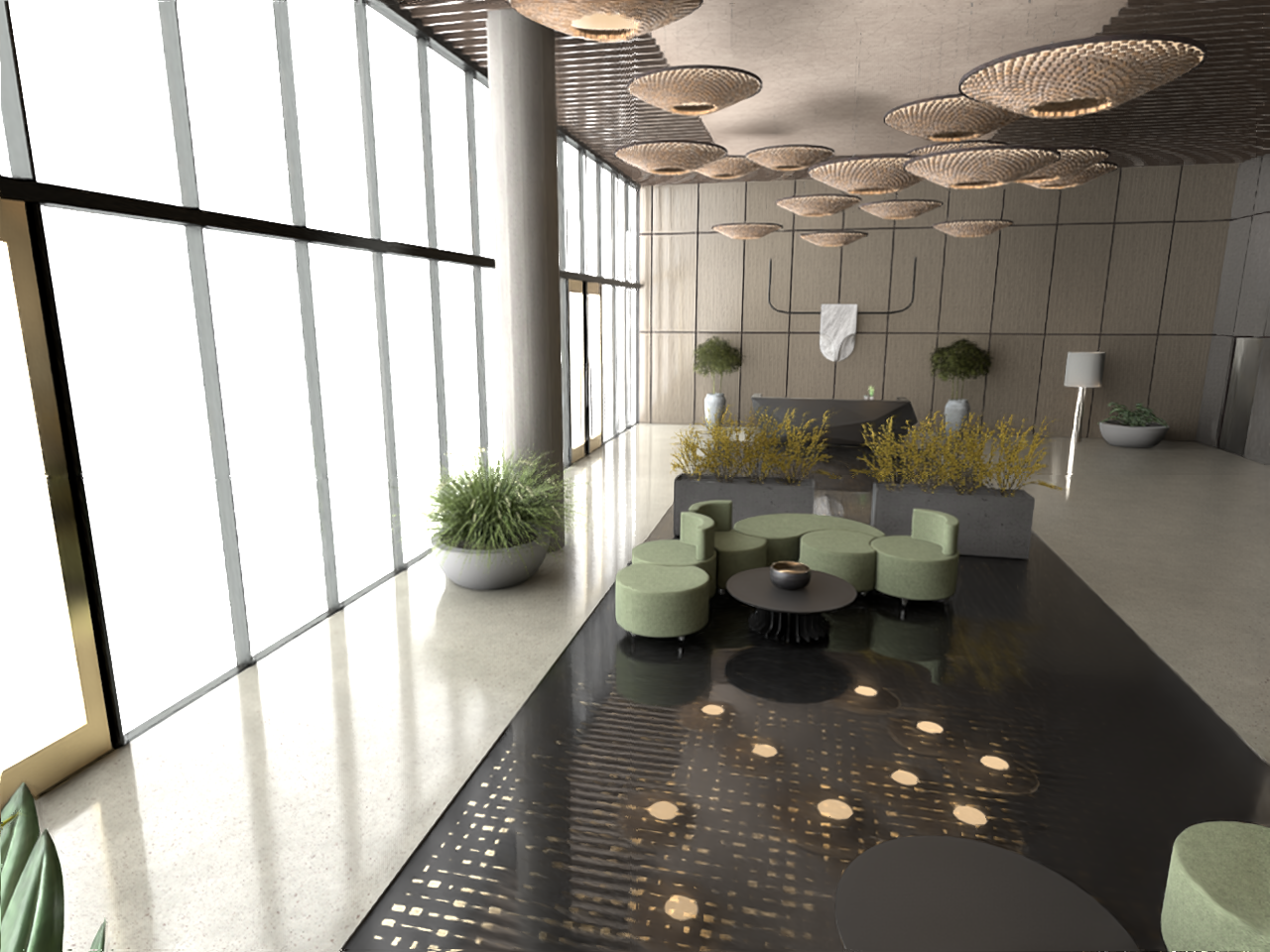
Figure 4. Frozen-model rendering and input GT RGB from exactly the same view.Figure 5. M1–M4 and input GT across five fixed views.
The browser hides ceilings and surrounding walls only for cutaway inspection. Runtime registration and display choices do not modify the downloadable frozen GLB or Blend files.
What this case suggests about editable world models
Modeling behaves like a structured—and lossy—regularizer
For M2–M4, the final scene depth is substantially closer to GT than native DA3 depth on the shared 180-view protocol: AbsRel falls by roughly 51–60%. One plausible interpretation is that object-level aggregation suppresses inconsistent local predictions. This is a hypothesis, not a controlled causal result: the same abstraction can also erase real surfaces and fine geometry.
Measurement constrains generation; it does not solve appearance
The strongest geometric route does not dominate PSNR or SSIM. Pose removes one source of uncertainty, but appearance still depends on material estimation, lighting, object detail, and renderer mismatch. Evaluating only RGB would miss spatial progress; evaluating only geometry would miss perceptual failure.
The 100-view check measures consistency, not unseen-view generalization
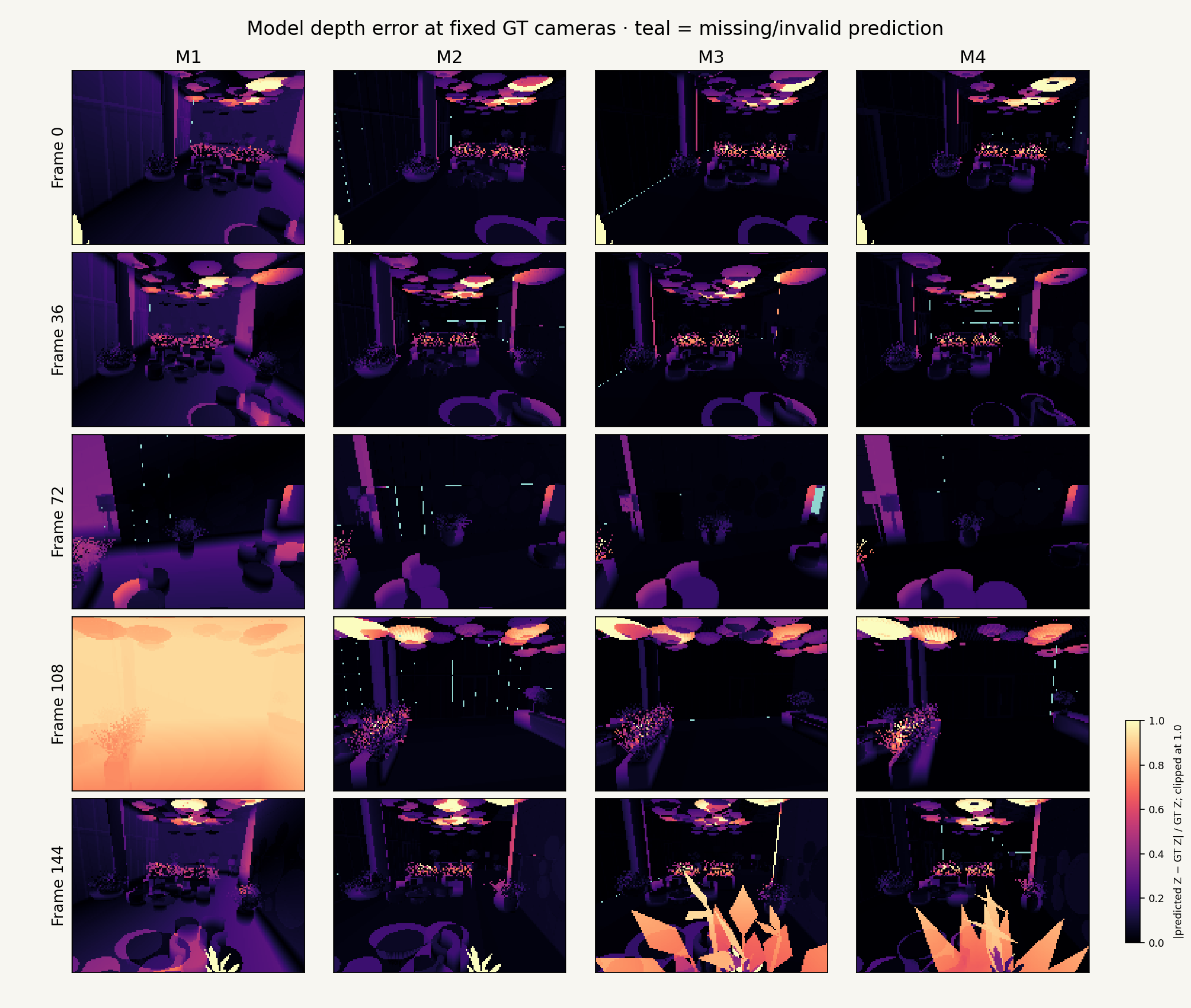
Tables 5 and 7 use the same seeded set of 100 cameras drawn from the 175 modeling frames outside the fixed-five check. These are additional evaluation views relative to that check, but their RGB images were available during modeling. On this set, M4 has the lowest depth AbsRel (7.47%), while M3 has the lowest RMSE (1.090 m).
Figure 6. Model-depth error at the fixed-five check; teal marks missing or invalid predictions.Table 6.Table 7.
Beyond the lobby: what survives in a phone-captured space?
Office Café is not a second run of the World Lobby benchmark and is not quantitative validation under the same protocol. It is an external, real-capture case study showing how an object-centric scene, a solved source-camera trajectory, video-to-model comparison, and physics replays can coexist in one inspectable artifact.
ViPE estimates camera motion and near-metric geometry from RGB video; ORB-SLAM3 provides a classical visual-inertial trajectory; Depth Anything 3 predicts pose-conditioned multi-view depth. These systems produce measurements, not editable objects. Agentic Real2Sim systems such as AHa-3D show how tool-using agents can assemble and verify Blender scenes. Our question is complementary and deliberately narrower: when the modeling objective is held fixed, which measurement channel changes the final editable world—and which errors remain downstream?
Our evaluation therefore spans both sides of the interface: upstream systems are judged as measurement pipelines, while the Blender outputs are judged as persistent spatial artifacts. This differs from evaluating pose, depth, or novel-view synthesis in isolation.
One synthetic scene and one engineering run per route do not establish general superiority or statistical significance.
The four routes are complete systems, not a strict single-variable ablation; M2 versus M3 cannot be attributed to IMU alone.
M4 uses GT camera poses and is a diagnostic route, not a deployable baseline or a theoretical upper bound.
M1 model-space metrics rely on GT-assisted Sim(3) and must not be ranked as native metric recovery.
The 100-view appearance and depth sets contain modeling RGB inputs; they are not a held-out novel-view benchmark.
Appearance metrics mix geometry, material, illumination, and rendering error. M4 revision 4 has not received a complete independent visual re-review.
Every table is generated from frozen assets. The public manifests expose model hashes, registrations, fixed views, and the exact seeded evaluation indices.
If this controlled study, its frozen assets, or its evaluation protocol supports your work, please cite the interactive article below.
@misc{agentic_world_2026,
  title        = {Plausible Is Not Faithful: Pose, Depth, and Agentic Blender Reconstruction},
  author       = {Agentic World Contributors},
  year         = {2026},
  howpublished = {\url{https://wentingw.github.io/agentic-world-blog/}},
  note         = {Interactive research article and frozen evaluation assets}
}